Tartuffe - KXT
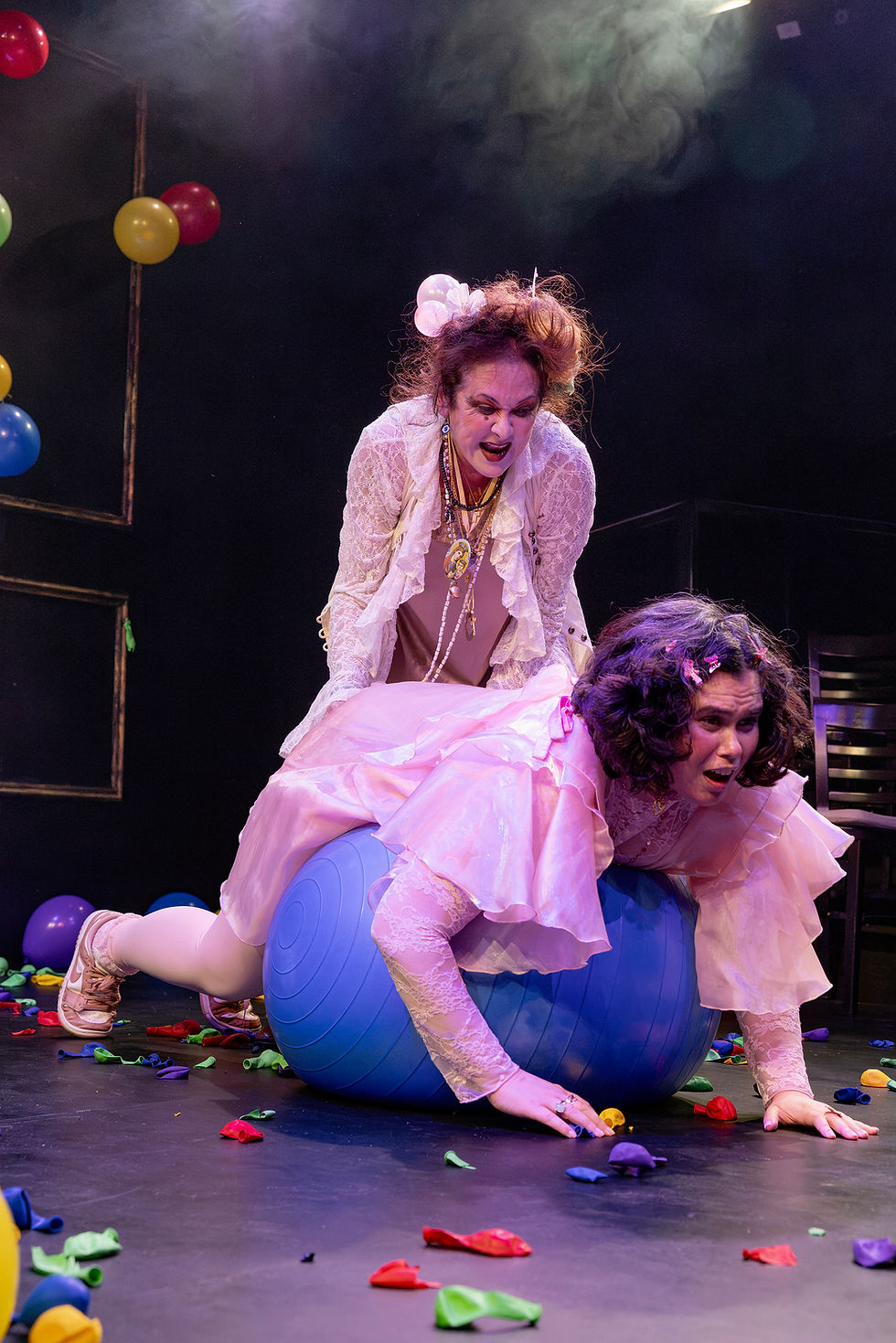
A grieving matriarch. A fractured family. A man who promises to make it all better. What could go wrong?
There is something reassuringly contemporary about returning to Molière’s Tartuffe right now. A charismatic outsider walks into a family already destabilised by grief, presents himself as the answer to its problems and proceeds to manipulate his way into the heart of the household. Belief, power, hypocrisy and the seduction of certainty: Molière’s 1664 comedy hardly needs much updating to feel familiar.
Phillip James Rouse’s new version, written and directed for KXT, brings this celebrated satire into a contemporary Australian setting, with a grieving matriarch, a fractured family and the increasingly dangerous influence of the chilled Tartuffe. It is a story about what happens when vulnerability meets charisma and about how difficult it can be to recognise manipulation when we desperately want to believe.
It is also interesting to ask why Tartuffe now. With another production announced for Malthouse in 2027, is there something particularly resonant about Molière’s great hypocrite at this moment? Perhaps it is simply coincidence. Or perhaps stories about charismatic figures who promise certainty while quietly accumulating power have acquired a particular charge in our current cultural climate. Sydney audiences have been here before: in 1997, the Sydney Theatre Company staged Tartuffe in a celebrated production directed by the then emerging Barrie Kosky, using Christopher Hampton’s translation. Almost thirty years later, the return of Molière’s great manipulator to Sydney feels like an intriguing theatrical echo.
Rouse’s production certainly doesn’t lack energy. The uncredited set design puts balloons to striking use, transforming the stage into a febrile, increasingly unstable environment. They are both playful and threatening, their accumulation contributing to the sense that this family is losing control of its own space. There is, however, a significant sonic warning attached: anyone with an aversion to the sound of popping balloons may want to locate the nearest exit.
Richard Whitehouse’s lighting design is hugely successful, working with the escalating action without overplaying its hand. Anna Gardiner’s flouncy costume design locates the characters within Rouse’s contemporary world, while Matty James’ sound design adds to the production’s increasingly heightened atmosphere.
The production is similarly generous with its volume. There are moments when the comedy tips into something of a shout-fest, with the relentless energy occasionally overwhelming the sharper rhythms of Molière’s comedy. A good dose of course language keeps proceedings firmly contemporary, particularly when it erupts from the mouth of the formidable Madame Pernelle, played with gleeful authority by Annie Byron. Byron is one of the production’s pleasures, bringing a deliciously imperious presence to a woman determined to have the last word.
The cast is varied and, for the most part, distinguished. Julian Garner gives Tartuffe an appropriately slippery charm, while Deborah Galanos brings emotional weight to Orgonelle. Lucy Miller’s Elmire has the intelligence and determination required to take on the household’s interloper. Travis Howard, Dominique Purdue, Will Thomas and Tamara Lee Bailey complete the ensemble with commitment and energy.
But Tartuffe ultimately hinges on one particular scene, the scene everyone knows is coming.
Elmire attempts to expose Tartuffe by allowing him to believe she is attracted to him, while Orgonelle is concealed nearby, listening. It is the great comic engine of the play: seduction, deception, danger and farce operating simultaneously. With Garner, Miller and Galanos in the roles, this should be dynamite.
It just doesn’t land.
The scene needs a particular combination of erotic charge and comic suspense. We need to believe that Tartuffe might actually succeed, that Elmire is taking a genuine risk and that Orgonelle’s proximity makes the whole thing excruciatingly funny. Here, the tension dissipates rather than builds. The scene becomes another burst of the production’s already considerable energy rather than the tightly wound piece of theatrical machinery it needs to be.
And that is perhaps the larger challenge of this Tartuffe. Rouse has created a production that is full of movement, noise and contemporary attitude, but sometimes the volume works against the precision of Molière’s comedy. Tartuffe is, after all, a play about performance: people pretending, watching, misreading and manipulating one another.
There are moments when this production finds that delicious territory. There are also moments when everything is turned up another notch when what is really needed is a pause.
Still, it is entertaining to see Molière’s great conman unleashed on a Sydney stage. More than 350 years after Tartuffe was first performed, the central question remains remarkably uncomfortable: why do otherwise intelligent people surrender their judgement to someone who tells them exactly what they want to hear?
Perhaps that is why Tartuffe keeps coming back.
And perhaps why, in 2026, he feels particularly at home.
Review by Kate Gaul
Image: Phil Erbacher


Comments